
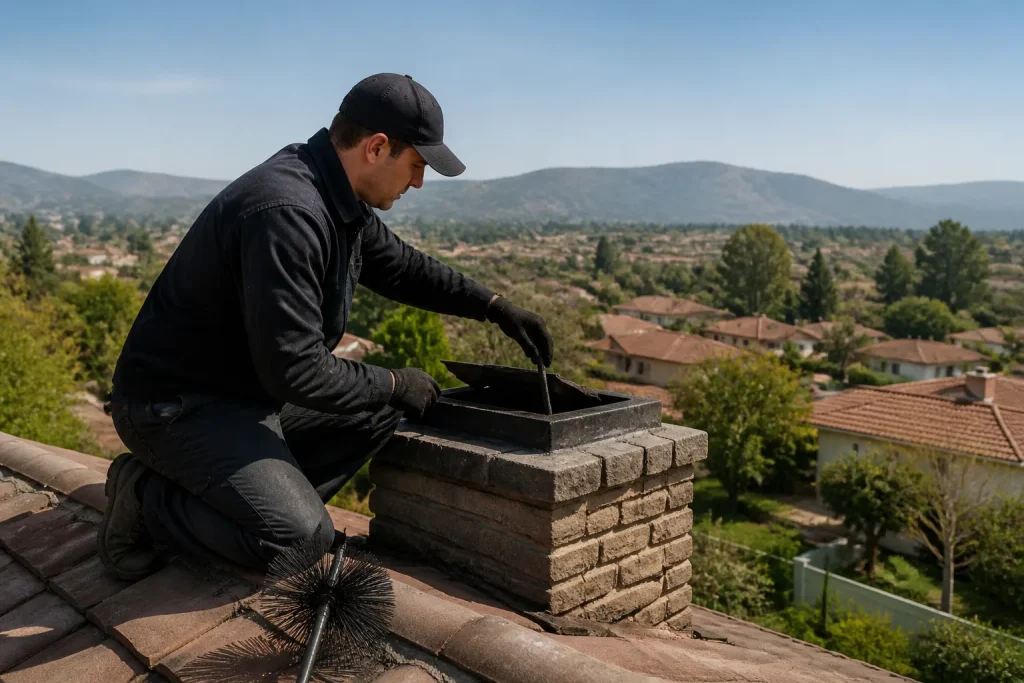
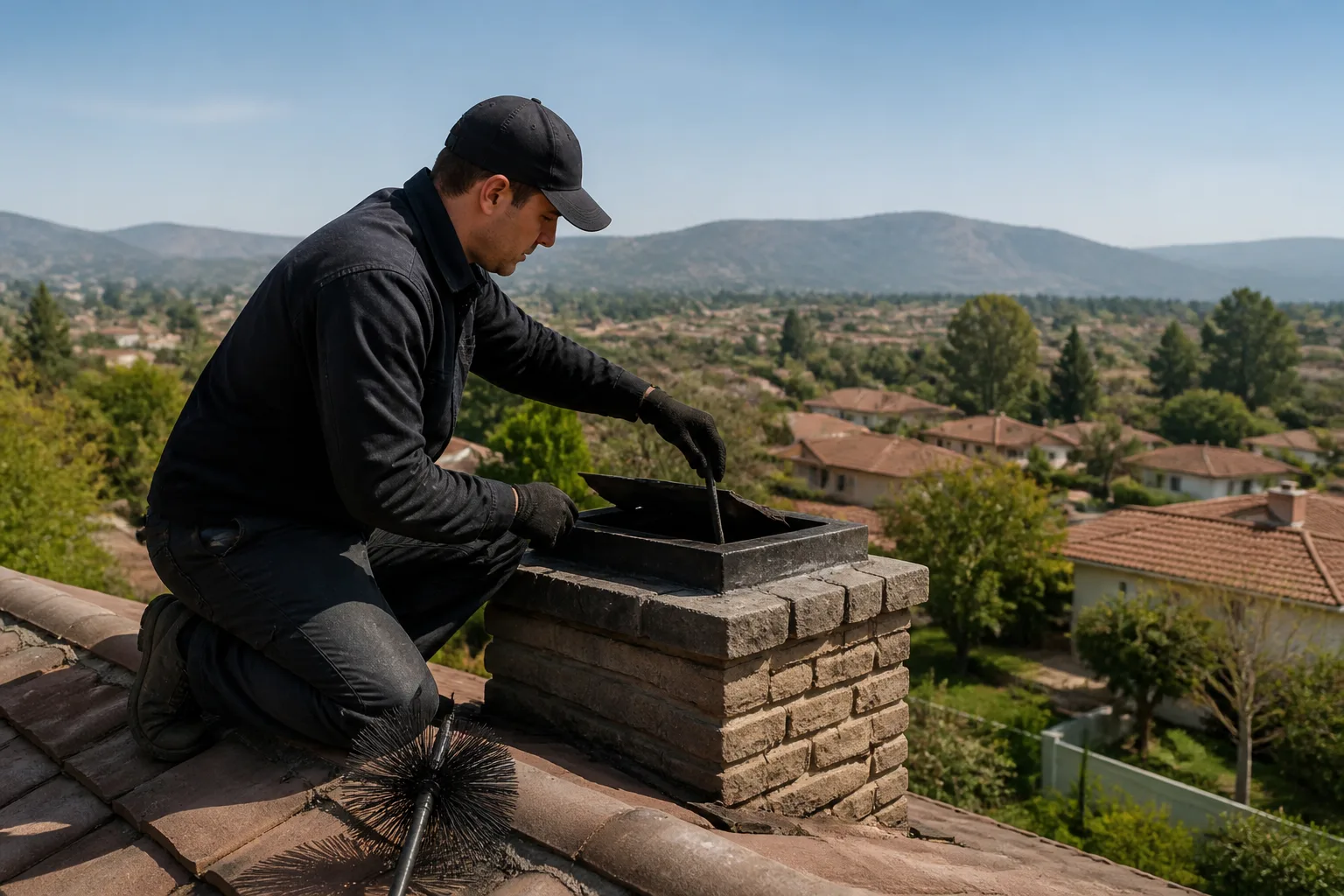
Emergency Chimney Sweep Near Me: What Brea Homeowners Should Do First
If you smell burning and aren’t sure whether it’s coming from your fireplace or your chimney structure, that distinction determines whether your next call is to 911 or a sweep, and you have about two minutes to figure it out. Most people who search “emergency chimney sweep near me” in Brea don’t actually have a chimney emergency. They have a fireplace problem that needs a sweep, or they have structural damage that needs an inspection. Getting that sorted in the first few minutes saves you a wasted call, a wasted trip, and possibly a fire department visit you didn’t need.
If you’d rather skip the triage and just talk it through with someone, call (877) 792-7505. We answer 24/7. Fast dispatch from 7am to 7pm, Sunday through Friday.
Key Takeaways
- An active chimney fire means 911 first, sweep second.
- Heavy smoke backing into the room with no visible fire is usually a blockage or pressure problem, not an emergency call to the fire department.
- Storm damage to the cap or crown makes the chimney unusable until it’s inspected, but not dangerous to your household.
- What you describe on the phone determines what equipment gets loaded and whether the visit is useful.
- Photos taken before anyone arrives protect you if an insurance claim follows.
How do I know if I have a chimney fire or just a smoky fireplace?
A real chimney fire has signs you can hear and feel, not just smell. A smoky fireplace usually has signs you can smell and see. Here’s how to tell them apart in Brea homes, where mild winters mean chimneys often sit unused for months and then get a heavy workout in December and January.
Active chimney fire: call 911 first. Then get everyone out of the house. Signs include a loud roaring or rumbling sound like a freight train, popping or crackling that doesn’t stop when you close the firebox doors, dense smoke or flames visible at the top of the chimney, a vibrating flue, or creosote flakes falling onto the roof. If you see or hear any of these, that’s not a sweep call yet. That’s a fire department call.
Heavy smoke backdraft with no fire: this is a sweep call. If smoke rolls into the room and the fire itself looks normal, you likely have a blocked flue, a closed or stuck damper, negative pressure in the house, or a cold flue that hasn’t warmed up. Annoying and unhealthy, but not a 911 situation. A sweep finds the cause.
Structural damage after a storm: this is an inspection call. A cracked crown, a cap knocked loose, or masonry visible on the ground after wind means the chimney shouldn’t be used until it’s checked. There’s no fire risk to your household in that moment, but burning before an inspection is a bad idea.
What should I do in the first fifteen minutes while I wait?
Actions ranked by how much they actually help, based on what we’ve seen work and what doesn’t in Brea homes with older masonry fireplaces and modern insert setups.
- Get people out of the room. Anyone with asthma, young children, or pets should leave the immediate area first. Smoke exposure matters more than any single action below.
- Open a window or door on the same wall as the fireplace. This is the single most effective thing you can do for a backdraft. It equalizes pressure and gives smoke somewhere to go.
- Close the damper if smoke is coming from the firebox and there is no fire in the chimney itself. A closed damper stops the smoke path. If you suspect an active flue fire, do not close the damper, because the fire needs to vent and closing it can force heat and smoke into the room.
- Evacuate pets, then children, then adults. Pets panic and hide, so they take the most time. Move them early.
- Turn off the HVAC system. A running furnace or air handler pulls smoke through the house faster than open windows ever could.
- Don’t throw water on a chimney fire. It can crack masonry and cause steam burns. The fire department handles the flue.
Once the immediate action is done, sit down and take a breath. Then call.
How do I describe the problem when I call a sweep in Brea?
The details you give on the phone decide what gets loaded into the vehicle and whether the technician arrives prepared. Vague calls waste a trip for everyone. Here’s what actually helps.
- Say what you see, hear, and smell. Not “something’s wrong” but “smoke comes into the room when I open the damper, no smell of burned creosote, no roaring sound.”
- Name the fuel. Wood-burning fireplace, wood insert, gas log set, or gas insert. Each needs different equipment and a different sweep approach.
- Name the age range of the house. A 1950s Brea ranch house has a very different flue than a newer tract home. This tells us whether to expect clay tile, a metal liner, or an unlined flue.
- Describe the storm damage if that’s the issue. Fallen cap, cracked crown, brick on the roof, missing mortar, animal nest sounds. Photos help more than words if you can send them.
- Say whether the chimney is currently in use, whether there’s a fire burning right now, and if you’ve used the fireplace in the last 48 hours. This changes what equipment we bring and when we can safely work.
In our experience, a homeowner who describes the problem in three sentences gets a more useful first visit than one who says “my chimney is broken” and hangs up. Being specific protects your time and ours.
What does “same-day” vs. “emergency” chimney service actually mean in Brea?
Here’s the honest version. A chimney sweep does not offer an emergency dispatch for a chimney fire, because a chimney fire is a fire department job. What a sweep offers is same-day response for a chimney that has smoked the house or shown damage, so it can be assessed before it’s used again. In Brea, where the burning season runs from late fall through early spring, a failed or smoking chimney usually means the household has no usable fireplace until it’s looked at. That’s the urgency, not a countdown timer.
Operationally, a same-day service means the call gets booked into the current day’s schedule if there’s room, and the technician brings the standard sweep kit plus camera equipment in case an inspection turns into a repair. That’s why we always ask whether you have a wood insert or a gas set on the phone. The van gets loaded differently for each.
What about cost? Same-day visits are priced by the written estimate like any other visit. There’s no trip fee and no surcharge for getting the work done today. The estimate is free, and the written estimate sets the final price. If you call outside dispatch hours, we book you into the next opening, Sunday through Friday, 7am to 7pm.
What photos should I take before the sweep arrives?
If there’s any chance an insurance claim is coming, photos taken now are worth more than photos taken after a technician has touched anything. Here’s the list:
- The firebox, with any fire extinguished and the doors open, showing the interior brick and any visible cracks.
- The damper, from fully closed to fully open, showing whether it moves freely.
- The smoke chamber if you can see into it with a flashlight, and the flue opening from above the damper.
- The top of the chimney from outside, showing the cap, crown, and any visible damage. Use your phone’s zoom from the ground rather than climbing up.
- Any debris on the roof or ground that fell from the chimney, with a shoe or hand in frame for scale.
- The room where the smoke backed up, showing soot patterns, staining, or smoke damage on walls and ceiling.
We include a camera inspection and photo report as part of an inspection, so you’ll have your own documentation. But your photos from the moment of the event may show things that no longer exist by the time we arrive, and those are the ones an adjuster will want.
When should a Brea homeowner call a professional instead of handling it themselves?
Almost always, once smoke or damage is involved. The three things you should never handle yourself: anything involving the flue interior or creosote (that’s the sweep’s job), anything above ground level on the roof (ladder injuries are the most common chimney-related household accident we hear about), and anything involving a gas log set or gas insert, where a mistaken knob or unlit burner is a real carbon monoxide risk. If your fireplace uses gas, call us, don’t poke it.
What you can do: close the damper, open windows, take photos, and describe the problem clearly. That’s it. Leave the brush, the ladder, and the flashlight work to someone who does it every day. Our technicians have up to 13 years of experience, and for the parts of a chimney that are genuinely dangerous, that experience is the point.
For the routine work that keeps a Brea chimney safe before the season starts, a yearly Chimney Sweep Brea appointment clears the creosote that builds up between burns. If your fireplace has stopped drawing properly, fireplace repair is usually the answer, not a full rebuild. When masonry, crown, or flue work is on the list, chimney repair handles it with professional-grade materials from DuraFlex, HeatShield, Gelco, and Copperfield, so a fix is a fix and not a patch.
For an ongoing sweep schedule or a first-time inspection, a chimney sweep visit is the right starting point either way.
The Bottom Line
The most useful thing you can do when you smell burning and aren’t sure what’s happening is decide which of three buckets you’re in: active chimney fire (911), smoke backdraft without fire (sweep), or storm damage (inspection). Once you know that, everything else – the phone call, the equipment, the timeline – falls into place. Take photos before anyone arrives. Describe what you see, hear, and smell. And don’t try to fix it yourself above the firebox line.
If you’re in Brea and need help, Chimney Sweep Brea offers free estimates, call (877) 792-7505. We answer 24/7. Fast dispatch from 7am to 7pm, Sunday through Friday.
Frequently Asked Questions
Not emergency services, but yes to a same-day sweep if you can get one. A smoking fireplace means the flue is blocked, the damper is stuck, or the house is under negative pressure. It’s a sweep urgency, not a 911 call, unless you also see or hear signs of an active chimney fire. Call (877) 792-7505 to get booked in.
No. A chimney fire damages the flue, and the visible fire going out doesn’t mean the creosote above it has cooled or the tile hasn’t cracked. Use nothing until someone has inspected the flue with a camera. A HeatShield liner resurfacing is often the fix rather than a full reline, which is why we keep it in the toolkit. Call (877) 792-7505 for a free estimate.
Yearly, and more often if you burn heavily. Brea’s mild winters mean chimneys sit unused for months and then get used hard, which builds creosote in concentrated bursts. A yearly sweep clears it before the season. If you had a chimney fire or a heavy creosote load last year, don’t wait for the usual schedule. Call (877) 792-7505 to book.
Creosote builds up until it can ignite, which is a chimney fire, or the flue narrows enough that smoke backs into the room. Neither fails loudly on the day it’s about to happen. Some years the chimney is fine; skipping it isn’t a fire waiting to happen every time. But the year it isn’t fine, you find out the hard way. Call (877) 792-7505 for an inspection and an honest answer.
Written by the team at Chimney Sweep Brea.
Need Chimney Cleaning Help?
Call Chimney Sweep Brea - the local pro we connect you with is licensed and insured, here with fast help in Brea.
(877) 792-7505